Image
When Jasmin Riley opens an email from her younger sister with another college essay draft, she smiles. Editing those sentences feels like déjà vu — back to childhood afternoons playing “school.”
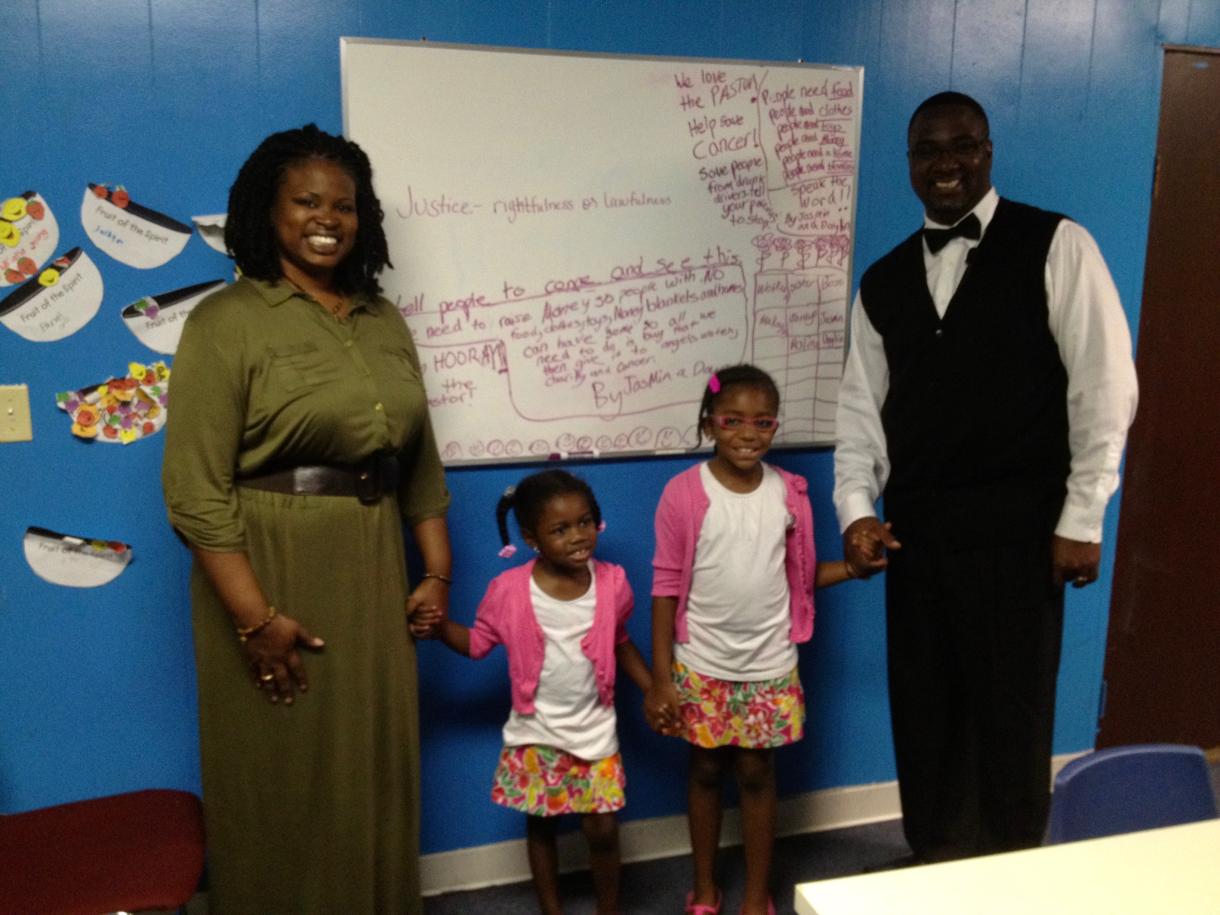
“When I was as young as seven, I used to make my sister play school with me,” Riley recalls, laughing. “I would handwrite assignments, grade them and try to make her the genius in the class.”
Now, when her sister receives her feedback, she asks Riley if she needs to correct everything. “I can’t help myself; I just want her to be the best she can,” says Riley. “She’s applying to schools in New York — and Duke.”
That instinct to teach never left Riley. As a psychology major at Duke, it has evolved into something bigger: an interdisciplinary path focused on educational equity. “My goal is to first gain classroom experience by becoming an elementary teacher,” she says. “My ultimate aspiration is to become a professor and train the next generation of educators.”
Riley’s first taste of interdisciplinary learning came through Duke’s Focus Program, where she enrolled in “Knowledge in the Service of Society.” A class offered through Duke Center for Documentary Studies (CDS) with Professor Susie Post-Rust —“Digital Photography: Education, Childhood and Growth” — introduced her to service learning, documentary studies and Durham Public Schools.
“Immediately you get to use a camera and go take photos at a school,” Riley says. “And then you're interacting with the children. I thought, wow, I really like photography.”
Her class documented life at George Watts Elementary, a public Montessori magnet school. Riley’s lens captured the joy of learning and the passion of Ms. Gross, the new art instructor. “Every time I watched the students enter the classroom, I could see how excited they were to create something special and learn new skills. These memories are extremely special to me.”
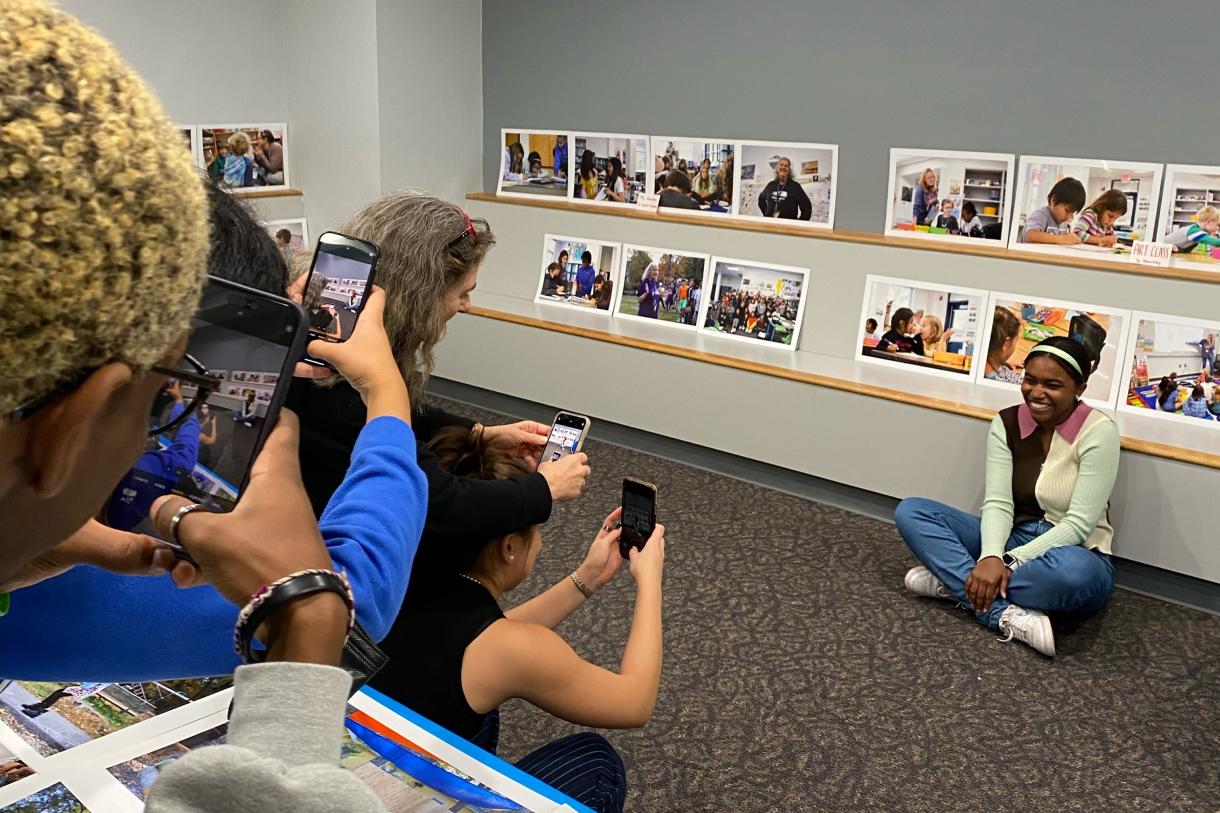
Her photographs of the class were stunning, and encouragement from professors and peers pushed Riley to pursue the Certificate in Documentary Studies, blending storytelling with education. “People would say, ‘Wow, your photos are way better than mine,’ and I thought, maybe I should keep going,” she says. That early validation helped her decide: “Okay, I’m going to be an education minor, and I’m going to earn the certificate.”
Five classes are required for the certificate, and one of the most formative was Gary Hawkins’ video documentary class in the fall of Riley’s junior year. It challenged her to move beyond photography and embrace filmmaking. “At first it’s funny, silly, creative videos, like making spaghetti,” she recalls. “Then it goes into our final project, where we have to really go out and make a longer video. It showed me I could do something like that.”
“I really enjoy doing interviews with people, getting to know them, and then documenting the authentic version of them in a video or photo,” she says. As a Trinity Ambassador for Documentary Studies, she now helps other students discover the power of visual storytelling, sharing what the certificate has opened up for her.
Her interdisciplinary journey deepened through Bass Connections, where Riley joined a project studying university-assisted community schools. “My professor for Education 101 was Amy Anderson, and I saw that she was a team lead,” she says. “And I knew I wanted to stay connected to doing service learning and overlapping education and research.”
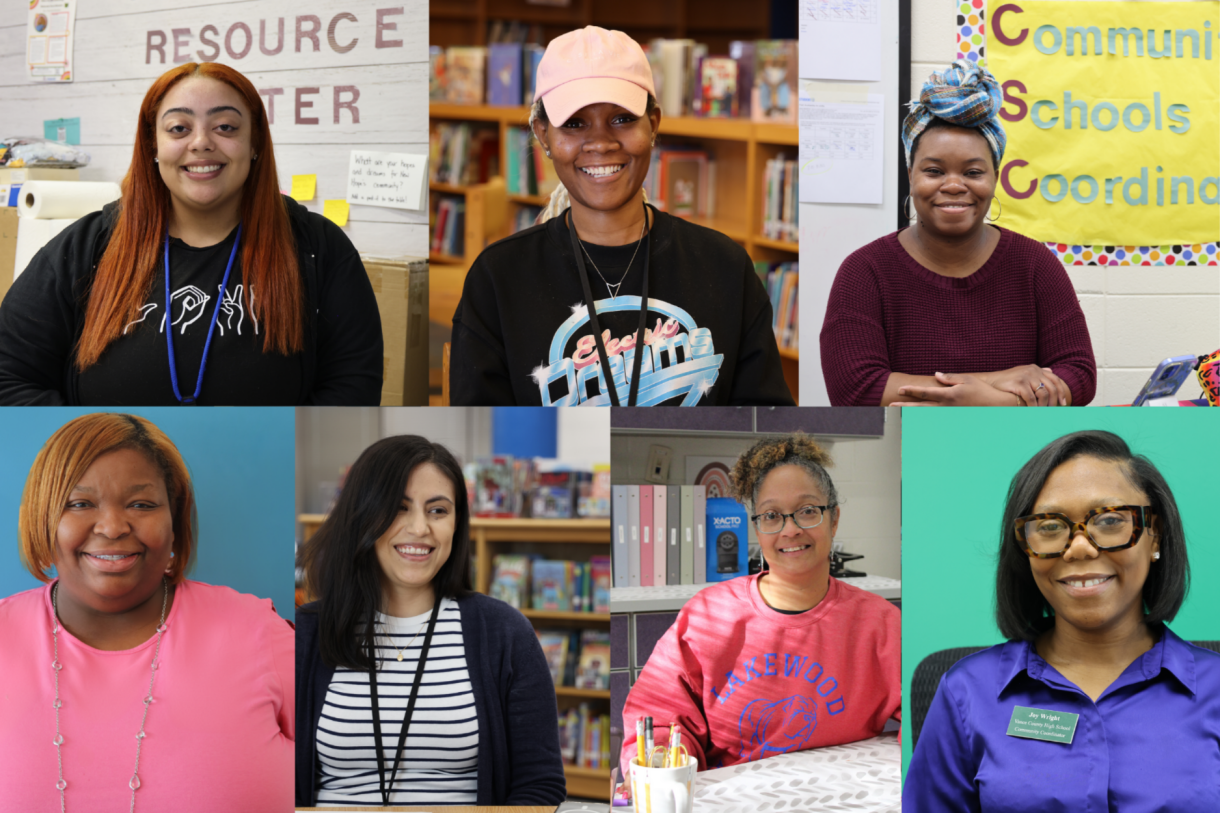
Her team focused on community school coordinators — a role at the center of North Carolina’s community school framework. These coordinators provide additional capacity for public schools and serve as “masters of partnerships,” explains Alec Greenwald, another lead on the Bass Connections project. “They lead what’s called an asset needs assessment to understand the hopes and needs of the school community, and they form a school advisory board of teachers, staff, parents and students that actually has real power.”
“It’s not a household term,” Greenwald adds. “It’s a unique role, and we wanted to capture the narratives of coordinators across the state to use as an onboarding resource.”
Riley helped make that vision a reality. “I didn’t know what a community school coordinator was at first,” she says. “But I learned they’re the backbone of a school.” She investigated the skills and lessons community school coordinators offer newcomers to the role. She conducted site visits, interviewed coordinators across Orange, Vance and Durham counties, and helped produce a booklet of narratives now used statewide.
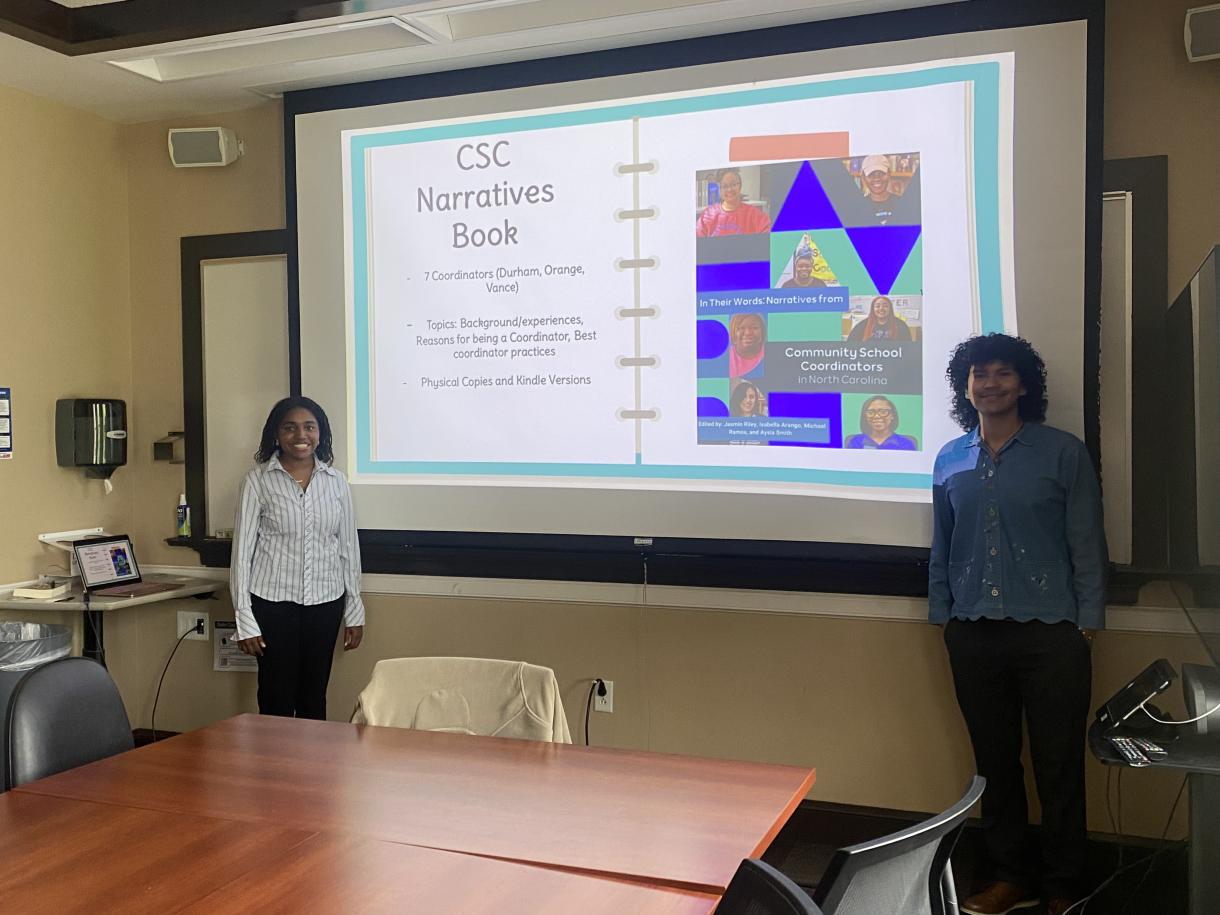
Then she took it further: “I figured out a way to make this interdisciplinary with Documentary Studies and my capstone project,” she says. With support from her Bass Connections team and mentors, and equipment borrowed from CDS, Riley produced a short documentary alongside the booklet — a creative project later displayed at CDS, shared at conferences and used for training new community school coordinators.
Riley is completing a Graduation with Distinction thesis, based on two years of research with her mentors Whitney McCoy, Shaundra Daily, Karis Boyd-Sinkler and Sandra Roach of Duke’s Lift Lab. The lab is focused on STEM equity, and her study explores how culturally affirming spaces influence STEM identity among Black girls and their mothers. “It’s psychology, but it’s also education and child and family policy,” Riley explains. That connection led her to apply for — and earn — a Morris Fellowship Award for Research on Child and Family Policy.
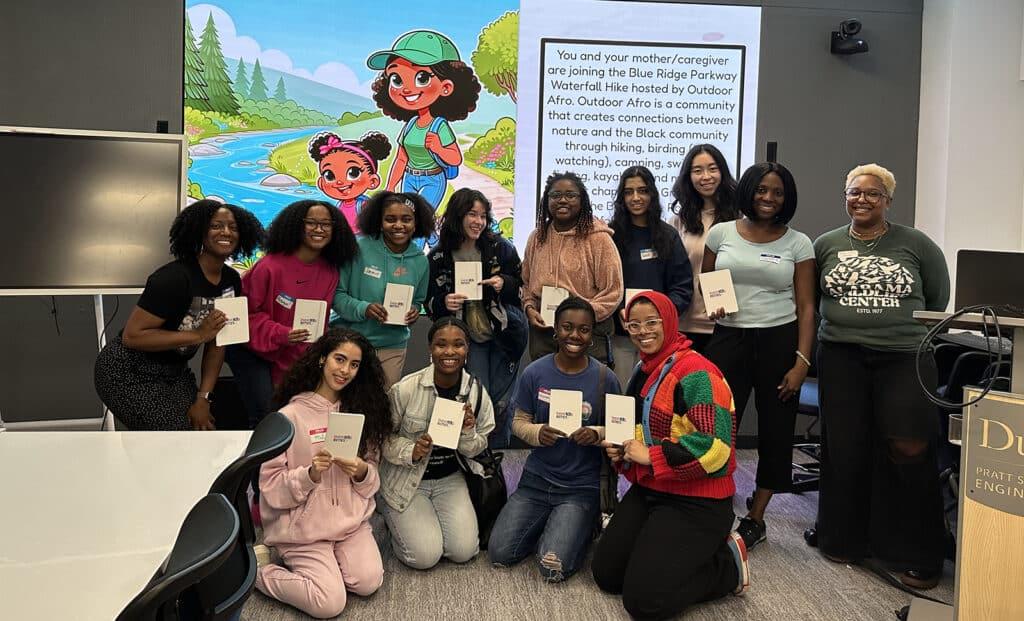
Her commitment to community also earned her the Samuel DuBois Cook Award, which honors community members whose work, research and service reflect the social activism and leadership of the University’s first Black faculty member. “It was amazing,” Riley says. “My parents came to the ceremony, and I had the chance to meet former Governor Roy Cooper, who was also honored. It was a moment I’ll never forget.”

Riley just learned she was accepted into Duke’s Elementary Teacher Preparation Program, which she’ll begin next fall after graduating in May with a psychology major, education minor and Certificate in Documentary Studies. She also plans to join TeachHouse, a Duke-affiliated teacher residency program in Durham.
“Bass Connections really pushed me to want to be a teacher,” she says. “I see teaching as a foundation — you can do so much from there. Then there's the community school coordinators or other jobs where you can build that community. It’s about making connections that last.”
Main image: Jasmin Riley (left) works on her short documentary film about community school coordinators.